
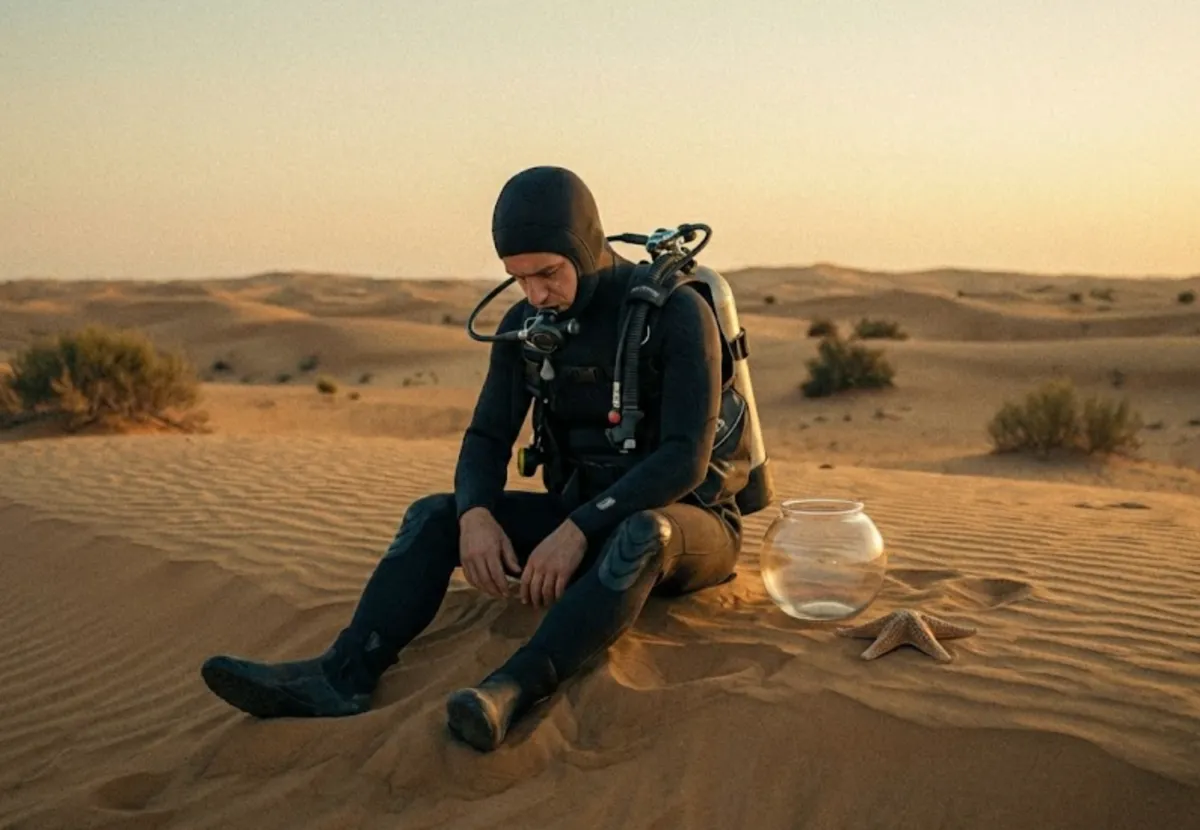
There is a specific kind of heartbreak known only to divers. It’s the feeling of hauling 50lbs of gear halfway across the world, paying for excess baggage, and wrestling into a wetsuit, only to hear the local Divemaster say:
"Yeah, the viz is soup today. You should have been here last month."
December is a minefield for divers. While it is peak season for general tourism, it is the transitional monsoon month for many of the world's best reefs. If you get it wrong, you aren't floating in high-definition paradise; you are fighting surge in a green washing machine.
I’ve looked at the wind charts and the migration patterns so you don’t have to. Here are the 5 destinations to keep your fins out of this December—and the superior alternatives to book instead.
The Gulf of Thailand (Koh Tao / Koh Samui)
The Trap: It’s famous, it’s cheap, and it’s a rite of passage for new divers. Many assume "Thailand is tropical, so the diving is always good."
The Reality: December is the absolute peak of the Northeast Monsoon for the Gulf islands.
We aren't just talking about rain; we are talking about hydrodynamic misery. The wind whips up the surface, making boat rides nauseating (even for those with sea legs). Underwater, the sediment runoff from the islands drops visibility to 5 meters or less. You spend the whole dive staring at your buddy’s yellow fins just so you don't get lost.
- ❌ The Verdict: Don't go. You’ll be doing skills in the sand because you can't see the reef.
- ✅ The Swap: The Andaman Sea (Phuket / Similan Islands): Just across the peninsula, the Andaman side is entering its glory days. The Similan Islands National Park is open, the water is glass-flat, and the visibility hits that 30m+ "aquarium" status.
The Great Barrier Reef (Cairns / North Queensland)
The Trap: Escaping the Northern Hemisphere winter for an Aussie summer sounds perfect.
The Reality: In North Queensland, December means two things: The Wet Season and Stinger Season.
Heavy tropical rains cause massive river runoff, clouding the inner reefs. But the real issue is biological. This is prime time for Box Jellyfish and Irukandji—highly venomous, transparent, and tiny. Operators will require you to wear full-body "stinger suits" (thick Lycra) from neck to toe. It kills the freedom of the dive, and there is always that low-level anxiety in the back of your mind.
- ❌ The Verdict: Low viz and lethal jellies? Pass.
- ✅ The Swap: Raja Ampat, Indonesia. While Australia is getting rained out, Raja Ampat is in its prime. The nutrient-rich currents are pumping, bringing in the oceanic mantas and massive schools of jacks. It is arguably the best biodiversity you can see on the planet right now.
The Northern Red Sea (Hurghada / Sharm el-Sheikh)
The Trap: Cheap flights to Egypt and the promise of year-round diving.
The Reality: Look, you can dive the Red Sea in December, but you are going to be cold.
The water temp drops to around 21°C (70°F), which sounds manageable until you factor in the wind. The desert climate creates a fierce, biting wind chill. When you surface after a 50-minute dive, that wind hits your wet skin and sucks the heat right out of your core. You spend your surface interval shivering in a hoodie rather than relaxing.
- ❌ The Verdict: Unless you are dry-suit certified or love being frozen, wait for spring.
- ✅ The Swap: Bonaire or Cozumel: If you want easy shore diving or drift diving without the thermal shock, the Caribbean offers balmy 27°C (80°F) water. You can dive in a shorty or a 3mm and actually feel your toes when you get out.
The Seychelles (Inner Islands)
The Trap: A luxury honeymoon destination that promises turquoise waters on the postcards.
The Reality: December marks the Northwest Monsoon. The winds pick up, blowing seaweed onto the beaches and churning up the sand.
But the main issue for divers is the plankton bloom. While this can attract Whale Sharks (which is cool), it often turns the water into a murky, green soup. If you are paying Seychelles prices, you want 40m visibility, not 8m.
- ❌ The Verdict: Too expensive for such unreliable conditions.
- **✅ The Swap: The Maldives (Ari Atoll). **December is the start of the Iruvai (Northeast Monsoon) in the Maldives. The current flows from the east, flushing the channels with crystal clear water. It’s shark season, the skies are blue, and the visibility is infinite.
The Mediterranean (Malta, Greece, Italy)
The Trap: Finding incredible off-season deals on accommodation.
The Reality: The Med is not a tropical sea; it has a proper winter.
Most dive centers actually shut down operations in November. The ones that stay open run limited schedules. The water is a bracing 14-15°C (58°F). The fish life also slows down significantly, retreating to deeper, warmer waters to conserve energy. It is dark, cold, and lonely.
- ❌ The Verdict: A waste of a trip for recreational divers.
- ✅ The Swap: The Canary Islands (Tenerife / Lanzarote). Known as the "Hawaii of Europe," these islands stay mild year-round. December is fantastic for seeing Angel Sharks, which migrate into shallower waters to breed. The water is a manageable 19-20°C, and the dive shops are in full swing.
🤿 The Diver's December Rulebook
Before you click "Book" on that holiday trip, check these three factors:
The Wind: In Southeast Asia, knowing the difference between the East Coast and West Coast monsoon is the difference between a nightmare and a dream.
The Surface Interval: You can tolerate cold water if the sun is hot. You cannot tolerate cold water if the air is freezing (looking at you, Egypt).
The Migrations: December is a transition month. Check if the "Big Stuff" is actually in town, or if they have migrated for the season.