
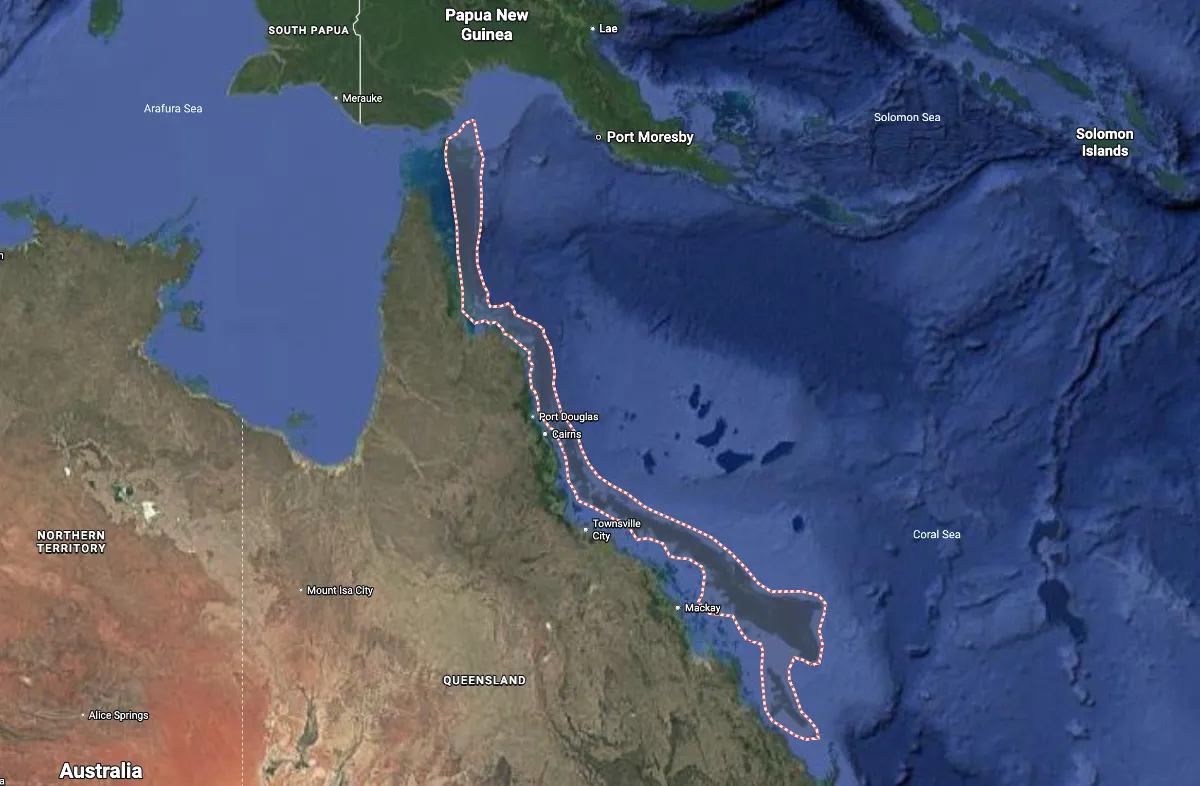
Stretching over 2,300 kilometres along Australia’s Queensland coast — about the same distance as travelling from Paris to Athens — the Great Barrier Reef feels endless. It is the word's largest coral reef system (the #2 barrier reef being in New Caledonia).
The reef is divided into several regions — Far North, North, Central, and South — each offering its own character and marine life. In recent years, rising ocean temperatures have hit the northern sections hardest, with an estimated 20–35% of coral lost due to bleaching. Still, vast stretches of the reef remain vibrant and teeming with life, and conservation efforts continue to protect what’s left of this underwater treasure.
If you’re planning a visit, your experience will depend on where you fly into. Each gateway — from Cairns to the Whitsundays to the southern islands — offers a different window into the reef’s beauty.
Cairns, Australia
Cairns is the classic gateway to the Great Barrier Reef. It’s a small, charming town where the main attraction is heading out to sea. Most visitors come to hop on a boat and explore the reef, though the surrounding region also offers beautiful mountains and waterfalls like Josephine Falls.
Two of the most renowned liveaboards in this area are Mike Ball and Spirit of Freedom. They run longer trips that venture farther out to the outer reefs, where the coral is healthier and the marine life more diverse. These are premium liveaboard experiences—priced higher than shorter trips or day boats—but the sights you’ll encounter make them well worth it.
Some Best Dive Sites for the liveaboards
🐠 1. Cod Hole (Ribbon Reefs, Northern GBR)
Best for: Giant potato cod encounters
Cod Hole is legendary among divers for one reason — its resident giant potato cods. These gentle giants can grow over a metre long and are famously friendly, gliding up close as if posing for photos. Located near Lizard Island, this site offers clear visibility and a surreal sense of calm as you drift past vibrant corals and swirling schools of tropical fish.
🐢 2. Osprey Reef (Coral Sea)
Best for: Shark dives and deep-sea walls
If you crave adventure, Osprey Reef delivers. Sitting 350 kilometres offshore, this remote atoll rises dramatically from the ocean floor, with sheer walls plunging over a thousand metres. Divers often spot grey reef sharks, hammerheads, and barracudas cruising in the blue. The site’s signature dive, North Horn, is world-famous for its thrilling shark feed experience.
💡 Tip: Only accessible via multi-day liveaboard trips. The journey is long, but the reward is unparalleled.
🪸 3. Steve’s Bommie (Ribbon Reef No. 3)
Best for: Macro life and brilliant coral
Steve’s Bommie may sound humble, but it’s a microcosm of reef magic. Rising from 30 metres to just 5 metres below the surface, this coral pinnacle bursts with life. Look for clownfish dancing in anemones, pipefish weaving through soft corals, and — if you’re lucky — pygmy seahorses. During the coral spawning season (November), it becomes an underwater fireworks show.
💡 Tip: Great for photographers and those who enjoy colourful reef dives.
Port Douglas, Australia
It's a more fancy town than Cairns with more high end restaurants and shops. You also can take day trip boats from here. And one of the main dive sites they take you as a day trip boat is the Agincourt Reef. Of course, if you take those multi-day liveaboards mentioned above, you'll pass by this reef as well.
🐬 4. Agincourt Reef (Port Douglas)
Best for: Beginners and snorkelers
Easily accessible and endlessly photogenic, Agincourt Reef is a cluster of outer reefs at the edge of the continental shelf. Its gentle conditions and incredible clarity make it perfect for new divers or snorkelers. Expect to see turtles, reef sharks, and dazzling coral walls teeming with parrotfish and butterflyfish.
💡 Tip: Day trips run daily from Port Douglas, with both snorkel and scuba options.
Townsville, Australia
Another popular destination to visit the southern great barrier reef is from Townsville and take a liveaboard from there. There are a good deal of freediving places on this liveaboard trip, some cool places to see giant clams (Area 42), underwater museum, and of course, the best of the best dives - Yongala.
🦈 6. Yongala Wreck (Ayr/Townsville)
Best for: History lovers and big marine life
Yongala is just the best wreck dive site in Australia. While technically just outside the reef system, the S.S. Yongala is a must-dive for anyone exploring Queensland. This 110-metre-long ship sank in 1911 and now forms a thriving artificial reef. You’ll spot giant groupers, sea snakes, eagle rays, and sometimes even whales in winter months.
💡 Tip: Strong currents can make this dive challenging — best suited for experienced divers.
Heron Island
Best for: Easy shore dives and turtle encounters
Heron Island, near the southern end of the reef, is a diver’s paradise where you can literally walk off the beach and be surrounded by coral. It’s also one of the best places in the world to see green and loggerhead turtles, especially during nesting season (November to March). The surrounding waters are calm, making it perfect for relaxed, unhurried dives.
💡 Tip: Stay overnight at Heron Island Resort — sunrise dives here are magical.
Lady Elliot Island
A known good place as one of the most prestige islands to dive. If you can find accommodation and afford the accommodation or find a spot
Best for: Manta rays, turtles, and pristine coral
Often called the “Home of the Manta Ray,” Lady Elliot Island is one of the most prestigious dive destinations in the entire Great Barrier Reef — and for good reason. Located at the southern tip of the reef, it’s part of a protected Green Zone, meaning the marine life here thrives undisturbed. The coral is vibrant, the visibility is exceptional, and the abundance of rays and turtles feels almost unreal.
From May to August, manta rays gather in large numbers, gliding effortlessly through the blue. Green and loggerhead turtles are also common year-round, and during nesting season (November to March), you can sometimes watch hatchlings make their way to the ocean under the stars — an unforgettable sight.
Because the island is small and eco-managed, accommodation is limited and tends to book out months in advance. If you can find a room — and fit it into your budget — it’s absolutely worth it. Staying overnight means you can enjoy early morning and twilight dives when the reef is at its most alive and tranquil.
💡 Tip: Access is by small plane from Bundaberg or Hervey Bay. Book your dives and lodging together early — Lady Elliot is one of those rare places that truly lives up to the hype.
🌴A word about whitsundays.
The Whitsundays are often the first place people think of when dreaming about the Great Barrier Reef — and for good reason. This chain of 74 tropical islands offers some of the most stunning beaches in Australia, with turquoise shallows and powder-white sand that look straight out of a postcard. It’s a fantastic destination for swimming, sailing, and snorkeling, especially around Whitehaven Beach and Hill Inlet, where the water clarity and colours are breathtaking.
That said, it’s worth knowing that the Whitsundays aren’t the best choice for serious diving. The reefs here are closer to the mainland and have less coral diversity compared to the outer reef systems. Visibility can also be limited, depending on tides and weather. If diving is your main focus, you’ll find far better conditions — and more marine life — by heading north toward Cairns, Port Douglas, or Lady Elliot Island.
Still, for above-the-water beauty and easy access to reef experiences, the Whitsundays are hard to beat. Many travelers combine a stay here with a liveaboard dive trip further out — the perfect balance of relaxation and adventure.